Choose a traction pad when…
the pad fits the tail area and the rider benefits from a defined rear-foot reference, extra texture or more repeatable foot positioning.
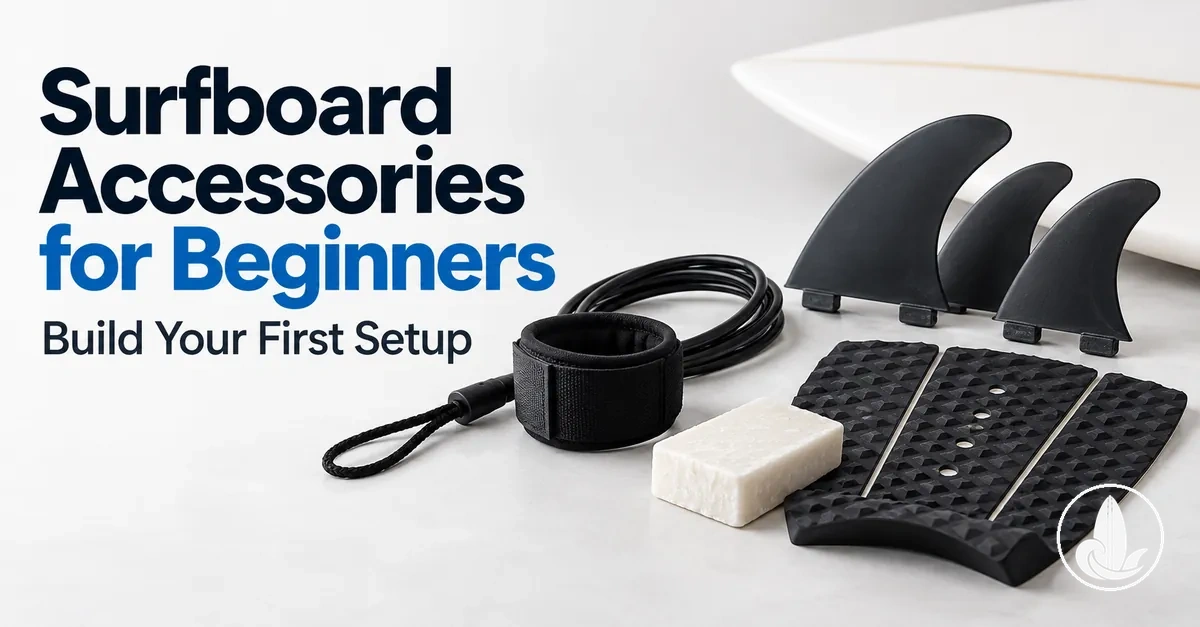
Build a beginner surfboard setup around four board-related functions: a leash for board retention, temperature-appropriate surf wax for deck grip, fins that match the board's fin system and supported configuration, and an optional traction pad when rear-foot grip or positioning feedback helps. Check board compatibility first, then match the leash and wax to expected conditions before preference or bundle convenience influences the choice.
First-setup decision guide
Choose by compatibility before preference
Use the checks in this order. Each step removes unsuitable options before you compare convenience or personal preference.
The result is a compatible accessory profile, not a universal product ranking. Product-specific specifications still need to match the surfboard and conditions.
This guide covers board-related accessories rather than surfboards, wetsuits, clothing or travel equipment. The sections below move from accessory roles to selection criteria, then to leash, wax, fin and traction-pad checks and the kit-versus-individual purchase decision.
A beginner surfboard setup uses board-related accessories to cover four distinct roles: board retention, deck grip, fin compatibility and, when useful, rear-foot traction.
A leash, surf wax, fins and a traction pad address these functions in different parts of the surfboard setup.

These roles describe function rather than rank every item as universally essential. The leash, wax and fins each cover a core board-use requirement, while a traction pad remains conditional on whether the rider benefits from extra rear-foot grip or positioning feedback.
Broader beginner surfing equipment and transport gear serve different needs, so this guide stays focused on accessories that relate directly to the surfboard and its use.
Choose a beginner setup by checking board compatibility first, then water conditions, surf conditions and safety demands, and finally grip needs.
Board fit determines which accessories can match the surfboard, while the remaining conditions narrow the selection within that compatible group.
The criteria below show what to verify and how each condition changes the accessory choice.

| Entity or accessory | Criterion | Condition to verify | Selection effect |
|---|---|---|---|
| Surfboard and accessory | Board compatibility | The accessory matches the board's relevant attachment, fin system, deck area or configuration. | Exclude options that do not fit the board before applying condition or preference criteria. |
| Surf wax | Water conditions | The wax category is intended for the expected water-temperature conditions. | Narrow the selection to a wax category suited to those water conditions. |
| Leash | Surf conditions and safety | The leash characteristics suit the surfboard and expected surf conditions. | Narrow the selection according to board fit and the demands of the expected conditions. |
| Fins | Fin compatibility | The fin base and configuration match the surfboard's supported fin system. | Exclude fin options that do not match the board's system or configuration. |
| Traction pad | Grip needs | Extra rear-foot grip or positioning feedback is useful and the pad suits the board's tail area. | Include a traction pad when that grip requirement is relevant to the beginner setup. |
The observed conditions narrow the choice in different ways.
Water temperature determines the relevant surf wax category, surf conditions and board fit qualify the leash selection, and the surfboard's fin system limits compatible fins.
Grip needs then determine whether a traction pad contributes useful rear-foot grip or positioning feedback, so preference comes after compatibility and condition checks.
For example, a beginner may start with an otherwise reasonable setup but find that its fin set does not match the surfboard's fin system; that option fails the board compatibility check and should be excluded.
If the expected water conditions also change, the suitable wax category can change while the board and compatible fins remain the same.
This keeps the beginner setup focused on fit, conditions, safety and grip criteria rather than turning the section into a broader buying guide.
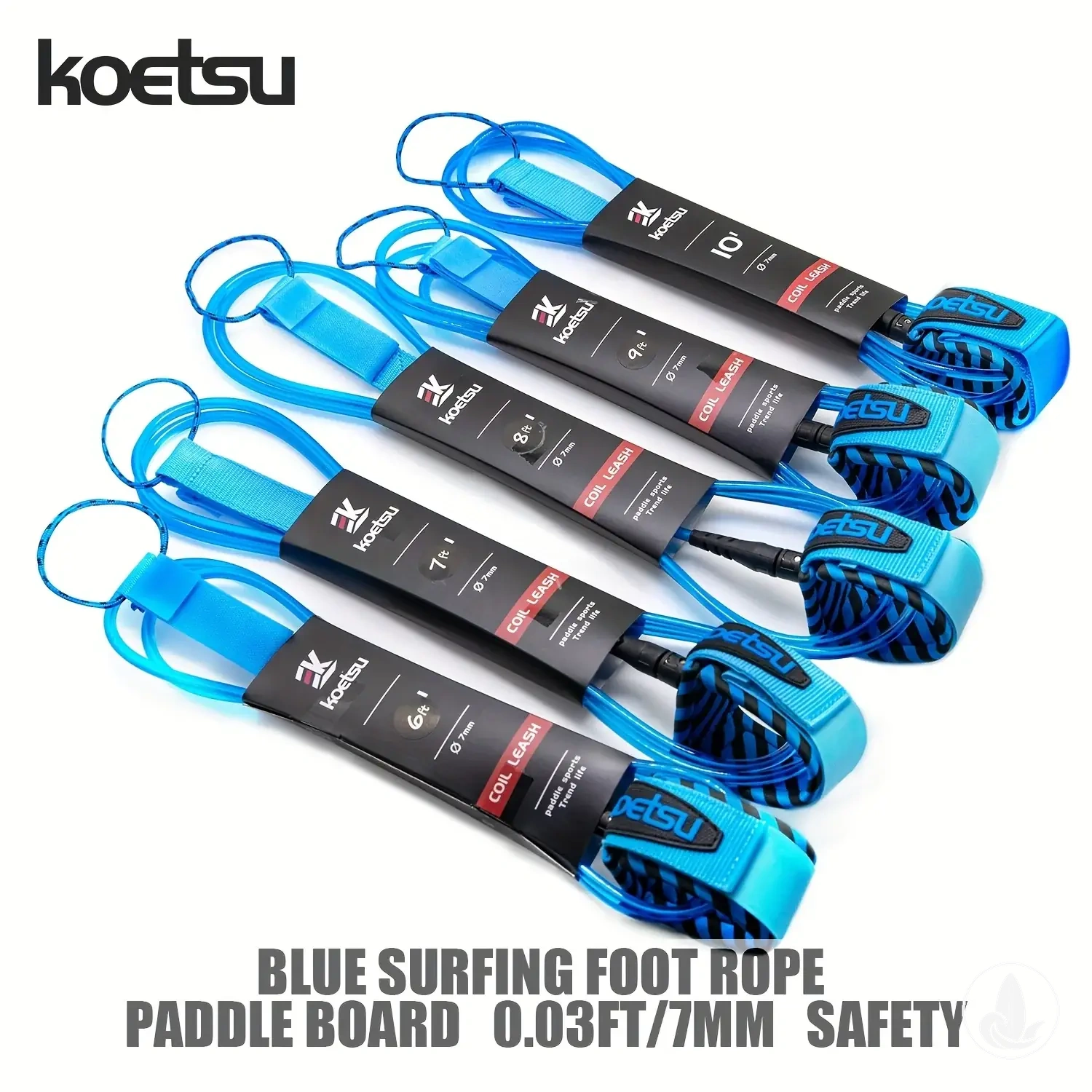
A surfboard leash should match the board length and expected surf conditions rather than a beginner label alone.
PODWARE's surfboard leash guide gives board-matching examples of a 6 ft board with a 6 ft leash and a 7 ft board with a 7 ft leash, while noting that stated leash length can be measured differently between products.
Check board fit, cord thickness or strength, and attachment condition before treating a leash as suitable.

A leash that is short relative to the board provides less separation after a fall, while greater leash length introduces more cord. Greater cord thickness generally trades more strength for more drag, so thickness should follow the expected surf conditions rather than a single beginner specification.
Surf wax should match the expected water temperature and provide suitable deck grip for those water conditions.
Temperature ranges vary by product, so a beginner should follow the wax category and temperature range stated by the manufacturer rather than assume the same cutoff applies across products.
Famous Surf, for example, labels its Cold wax for 15°C and below, Cool for 15–20°C, Warm for 20–26°C, and Tropical for 26°C and above.

| Wax category | Famous Surf water-temperature range | Selection condition |
|---|---|---|
| Cold | 15°C and below | Match this category to water within the manufacturer's stated cold-water range. |
| Cool | 15–20°C | Match this category to water within the manufacturer's stated cool-water range. |
| Warm | 20–26°C | Match this category to water within the manufacturer's stated warm-water range. |
| Tropical | 26°C and above | Match this category to water within the manufacturer's stated tropical-water range. |
Water conditions determine the suitable wax category because the temperature grade affects how the wax behaves and the grip it can provide on the surfboard deck.
Famous Surf states that wax that is too soft for the water can become slick, while wax that is too hard may not develop the texture intended to provide grip; basecoat is a supporting condition rather than a substitute for selecting a temperature-appropriate topcoat.
These surf wax basics concern selection rather than application: check the expected water temperature and match it to the manufacturer's labelled wax category for suitable grip under those conditions.
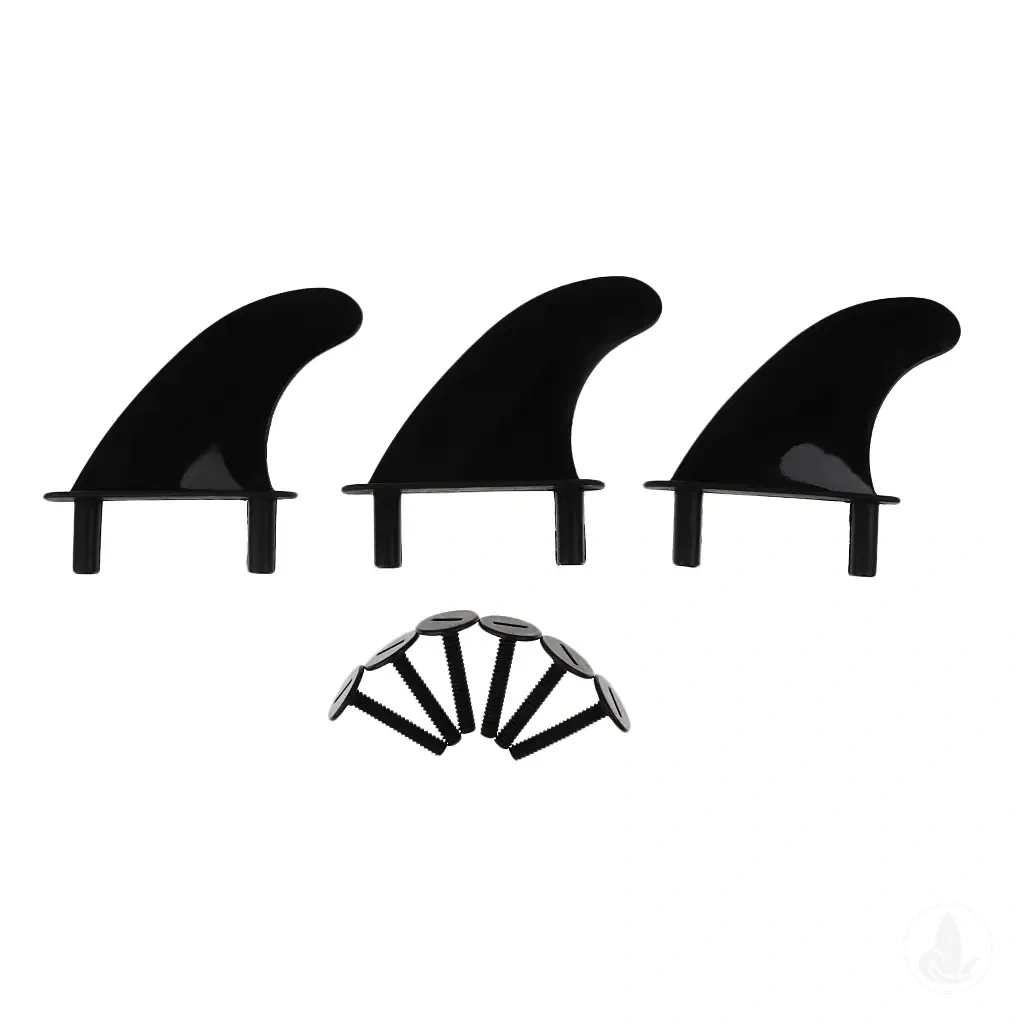
A fin set must match the surfboard's fin system and supported configuration before preference-based selection matters.
The fin base must fit the board's fin interface, and the number and arrangement of fins must match a configuration the surfboard supports.
Check both the fin system and intended fin setup before narrowing the compatible choices by preference.

Compatibility gate
Manufacturers and fin brands may group products by interface family, including FCS-compatible and Futures-compatible options; the board's installed system remains the deciding compatibility check.
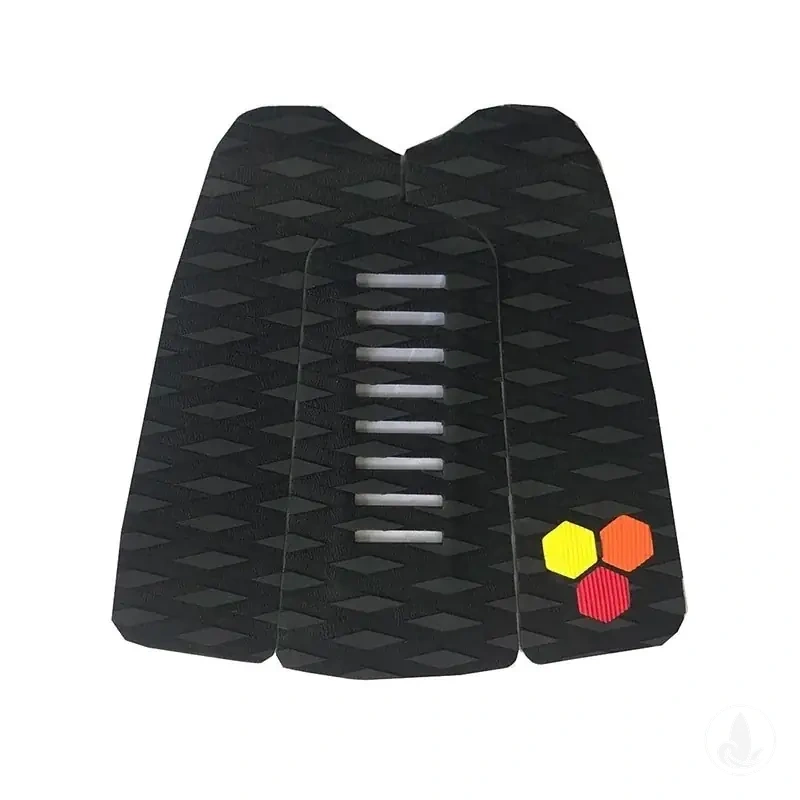
A traction pad is optional in a beginner setup: it can add rear-foot grip and a tactile positioning reference on the surfboard tail, but it is not required when a rider is comfortable with a wax-only deck.
A tail pad is most useful when its fit, pad shape and grip give the rider a repeatable rear-foot reference.
Choose one when that added reference assists rear-foot grip and positioning.

Choose a traction pad when…
the pad fits the tail area and the rider benefits from a defined rear-foot reference, extra texture or more repeatable foot positioning.
Wax-only can be enough when…
the rider is comfortable finding rear-foot position without an added tactile cue and the waxed deck already provides the grip needed.
Neither approach is automatically better for a beginner; fit and useful feedback determine whether a traction pad adds value.
Neither a beginner accessory kit nor individual items are inherently better for a first setup; the better purchase approach depends on whether convenience or item-by-item control matters more.
Compare what the bundle actually includes with what the surfboard and rider require, using convenience, compatibility control, customization, redundancy and value as the decision criteria.
| Purchase approach | Convenience | Compatibility control | Customization | Redundancy | Value condition |
|---|---|---|---|---|---|
| Beginner accessory kit | Several included items are grouped in one purchase. | Each included item still needs to suit the specific surfboard and first setup. | Limited to the combination included in the bundle. | Can include items the beginner already owns or does not need. | Value is stronger when the included items are compatible, useful and not duplicates. |
| Individual items | Each required accessory is selected separately. | Each item can be checked separately against board-specific requirements. | Allows the first setup to be assembled around individual requirements and preferences. | Unnecessary or already-owned items can be left out. | Value is stronger when separate selection avoids unsuitable, unnecessary or duplicate items. |
Choose a kit when
convenience is the priority and every included item has been checked for compatibility, usefulness and duplication against the actual first setup.
Choose individual items when
board-specific compatibility, customisation or avoiding duplicate and unnecessary accessories matters more than the convenience of a bundle.
The purchase format does not replace item-level checks: board fit and real accessory needs remain the deciding conditions.
The existing product examples below illustrate individual-item shopping after the compatibility checks above.
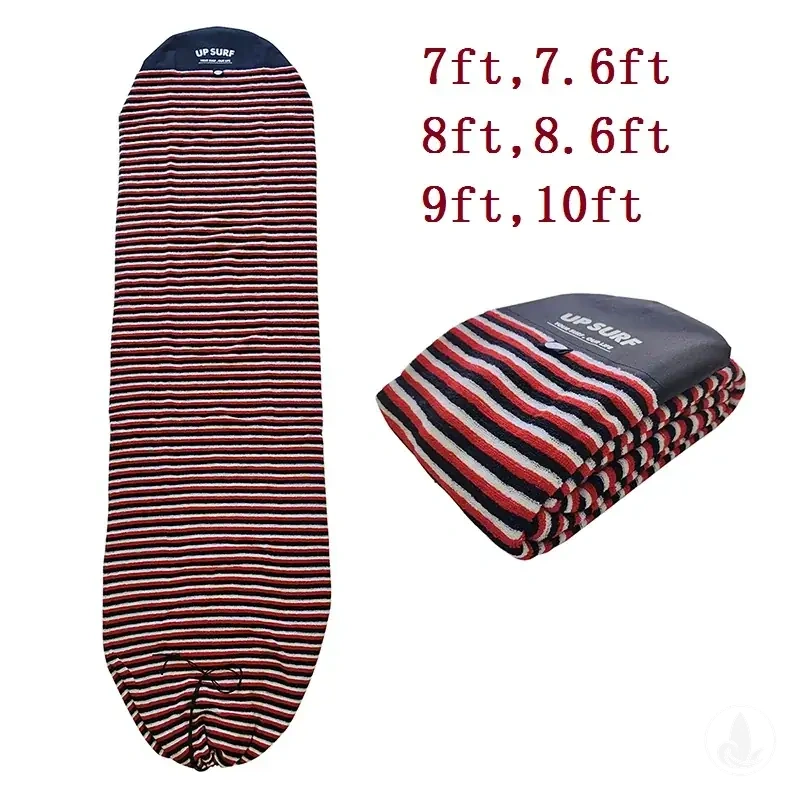
Match each listing to the relevant board and condition criteria before following the referral link. The surfboard sock is a protection accessory, not one of the four core board-use roles covered by this guide.