
Surfboard Accessories: Types, Functions and Essentials
Surfboard accessories are removable or supporting items used with a surfboard for grip and control, retention, protection and transport, or setup, repair and care. There is no universal essentials list: first match any required board interface, attachment or physical fit, then compare how well the option suits the surfing, transport or maintenance task. Built-in board structure and unrelated surfer apparel sit outside this board-focused scope.
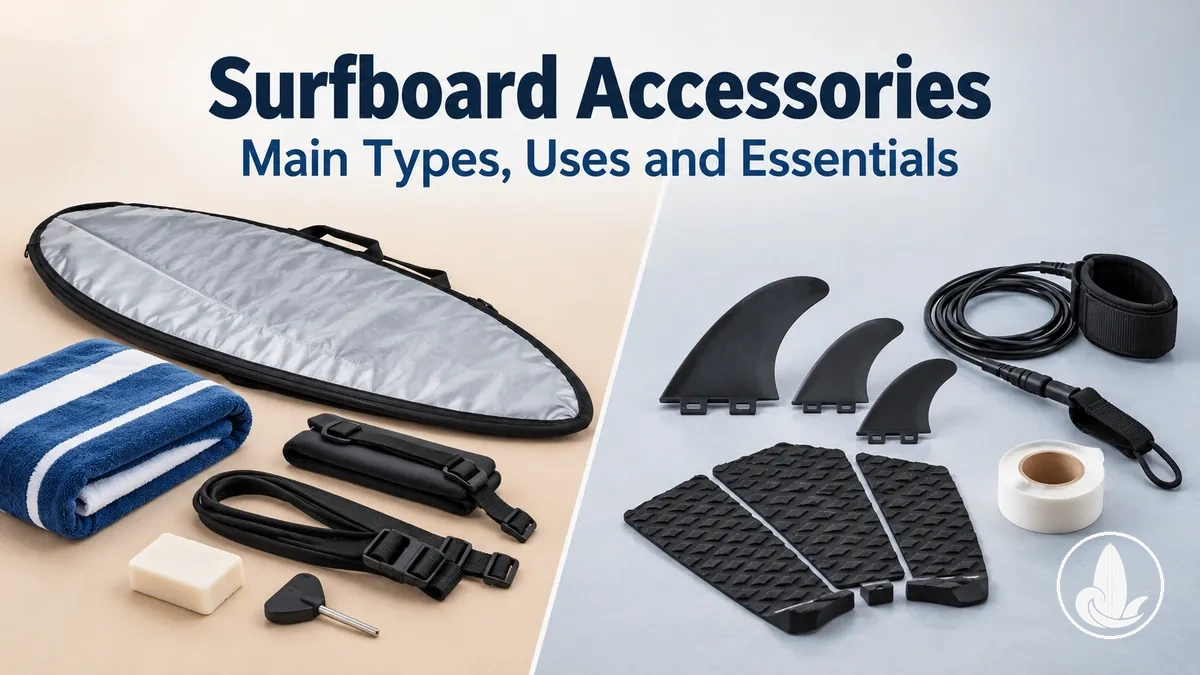
Decision guide
Choose by function, then rule out incompatible options
Start with the job the accessory needs to do. Where an item attaches to, fits, or covers the board, compatibility and physical fit are hard constraints; only after those are satisfied should feel, convenience, protection and upkeep decide between suitable options.
Decision rule: a required interface or fit mismatch can disqualify an accessory. Preference-level features matter only among options that already fit the board and the intended task.
The sections below define the accessory boundary, group the main types by function, and then apply the same compatibility-first logic to suitability and product comparison.
Table of Contents
What Counts as a Surfboard Accessory
A surfboard accessory is an item added to, attached to, or used with a surfboard to support a board-related function without being part of the board's permanent built-in structure. The category is defined by the item's relationship to the board, not simply by whether it appears in a surf shop or surf-gear catalogue.
Counts within this article
- Removable or supporting equipment for board control or deck grip.
- Board-to-surfer retention equipment such as a leash.
- Protection, carrying, transport or storage accessories used with the board.
- Tools and items for board setup, routine care or suitable minor repair.
Outside this scope
- Permanent built-in board structure and fixed components.
- Apparel and lifestyle items that do not perform a board-related function.
- Equipment whose relationship is to the surfer generally rather than to the board itself.
The boundary can depend on integration: a removable fin fitted to a compatible fin system can be treated as an accessory, while a permanently glassed-on fin is part of the board.
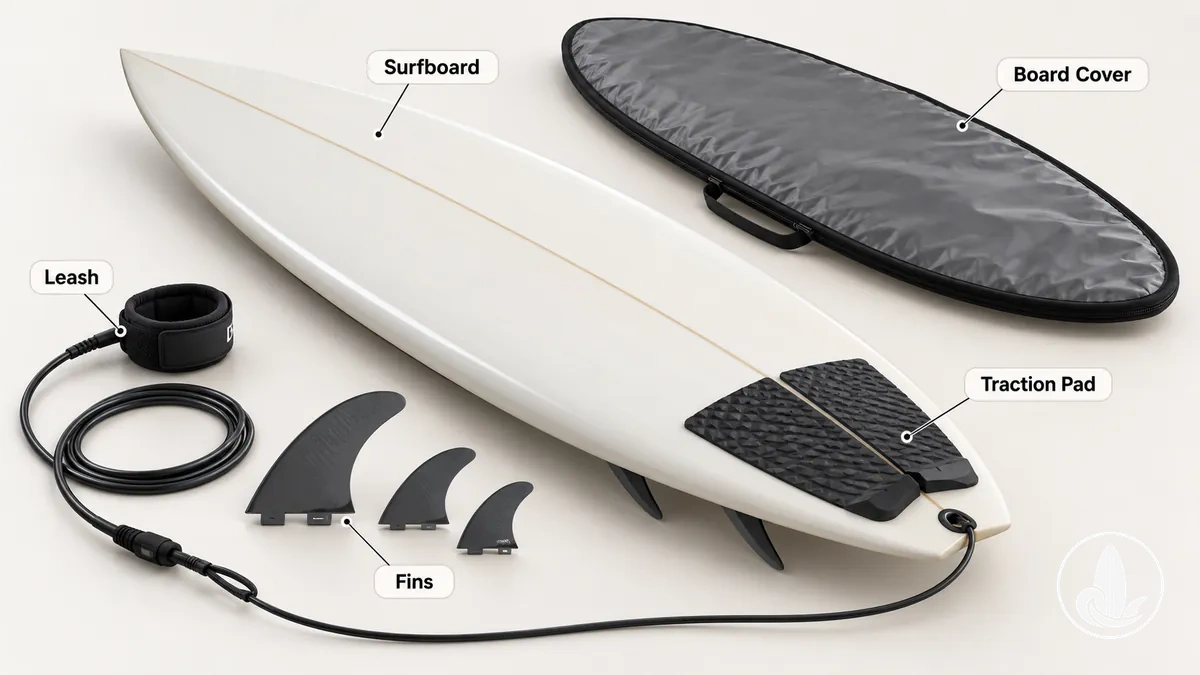
Main Surfboard Accessory Types by Function
Surfboard accessories are most usefully grouped by the function they support rather than by brand, price or merchant category. The main groups here are grip and control, retention, protection and transport, and setup, repair and care; they are representative rather than exhaustive.
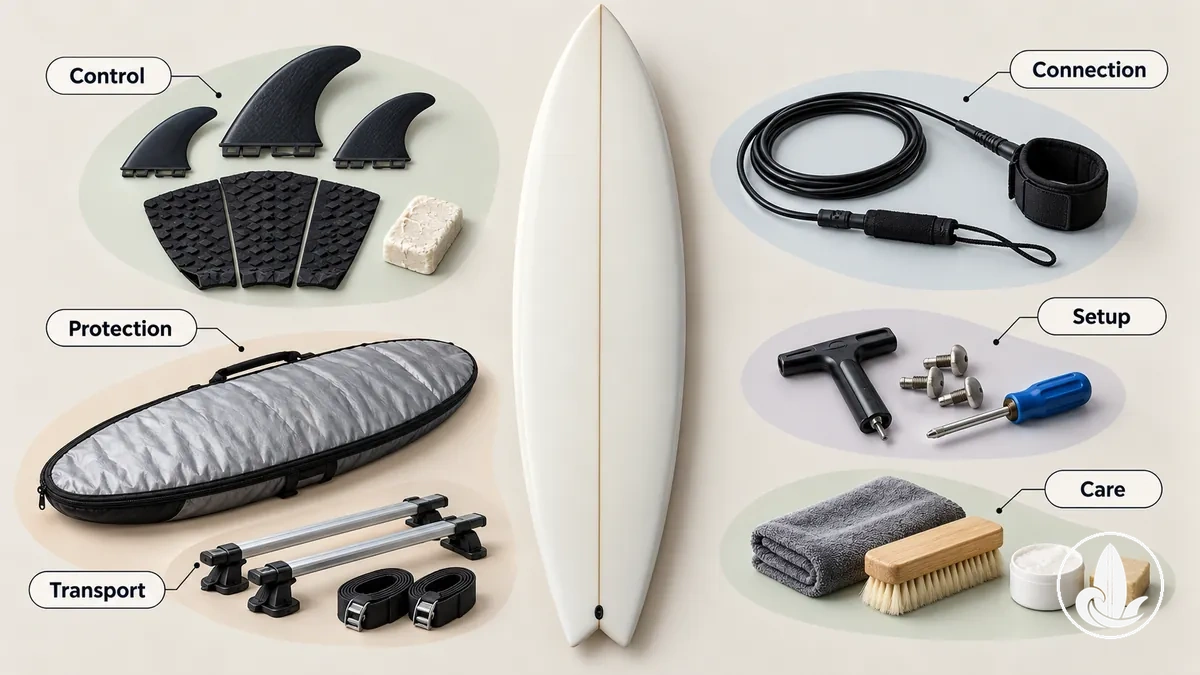
Grip and Board Control Accessories
Grip accessories support rider contact with the deck, while fins influence board response through the board's fin setup. These accessories act through different interfaces, so the attribute that matters first is not the same for each type.
- Surf wax
- the waxed deck surface.
- the wax formulation to its stated water-temperature range.
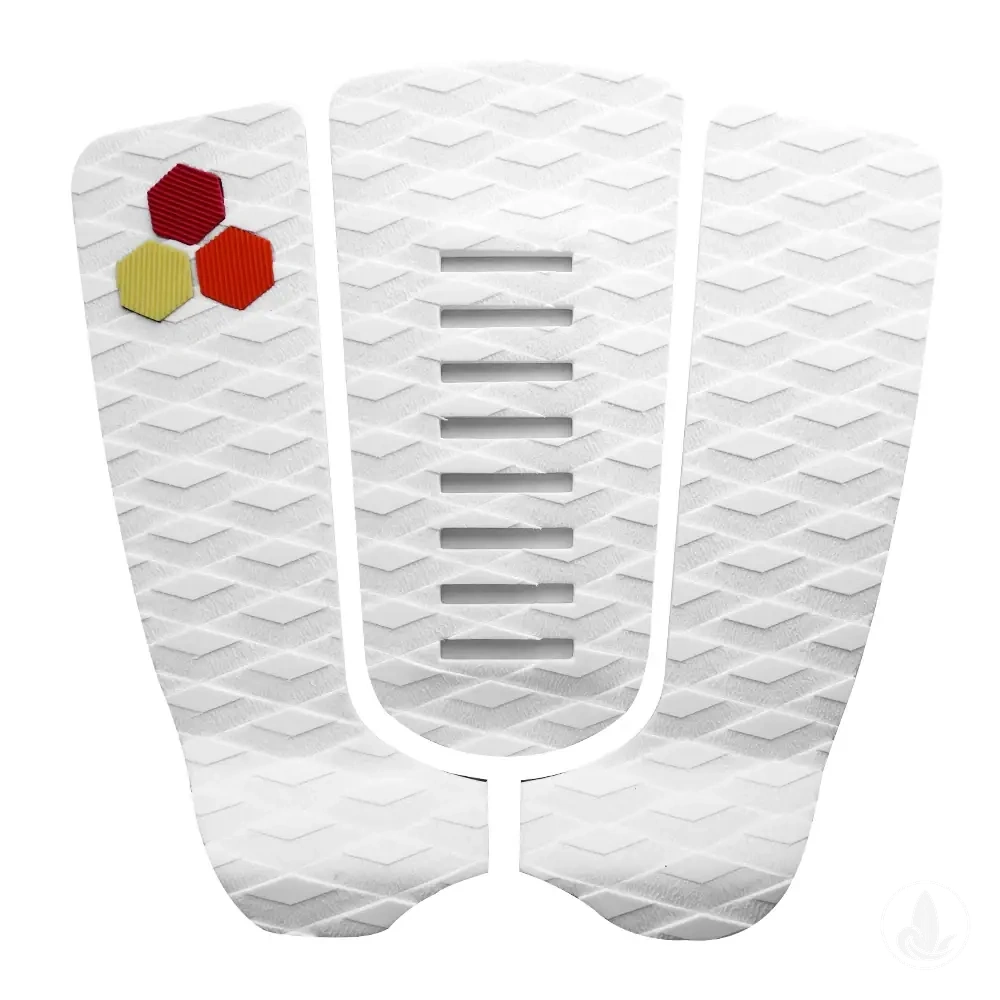
- Traction pad
- the specific deck area where it is installed.
- its size and placement to the board area and intended rider contact point.
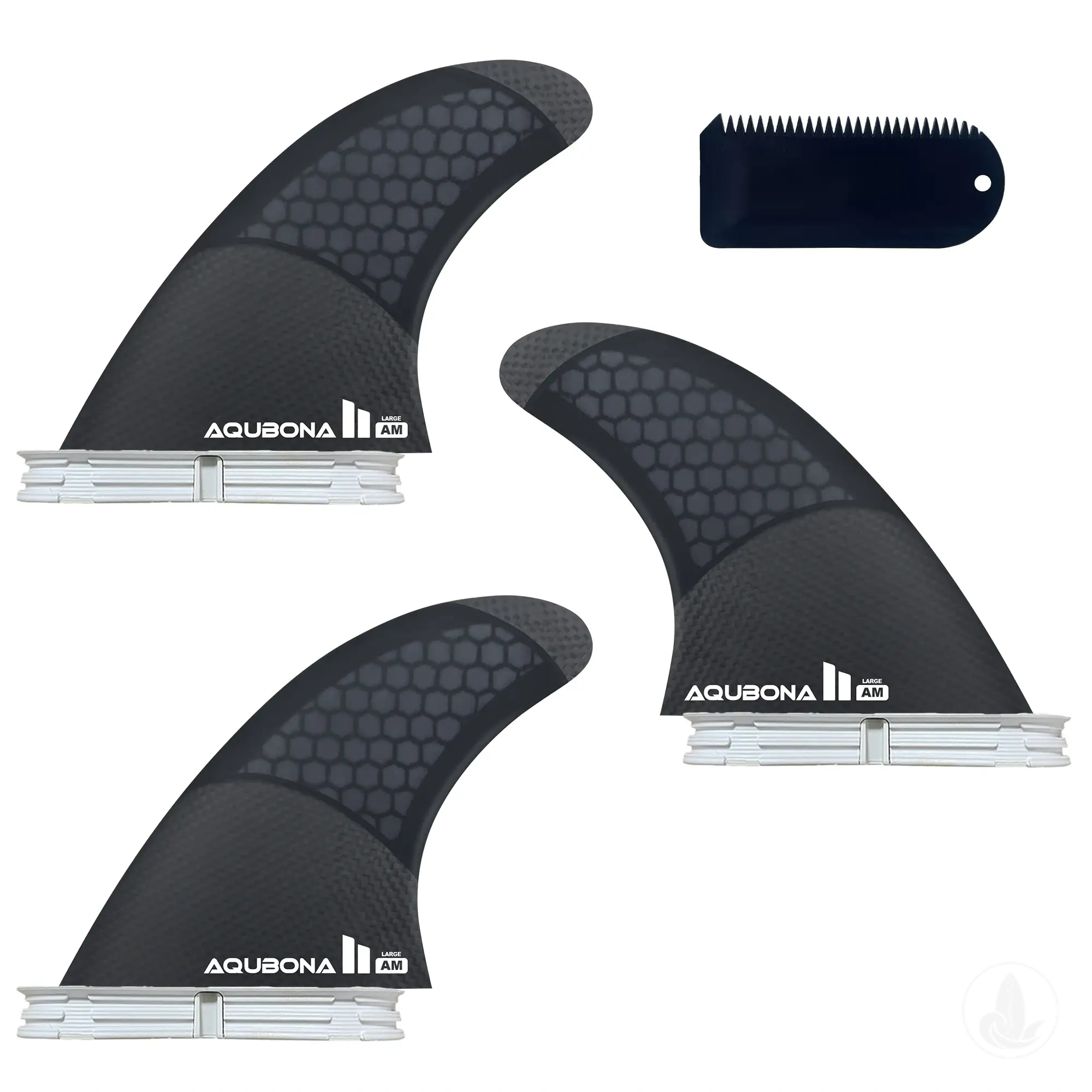
- Surfboard fins
- the fin setup and fin-to-board interface.
- the fin base and system to the board's compatible fin box or attachment system before comparing ride characteristics.
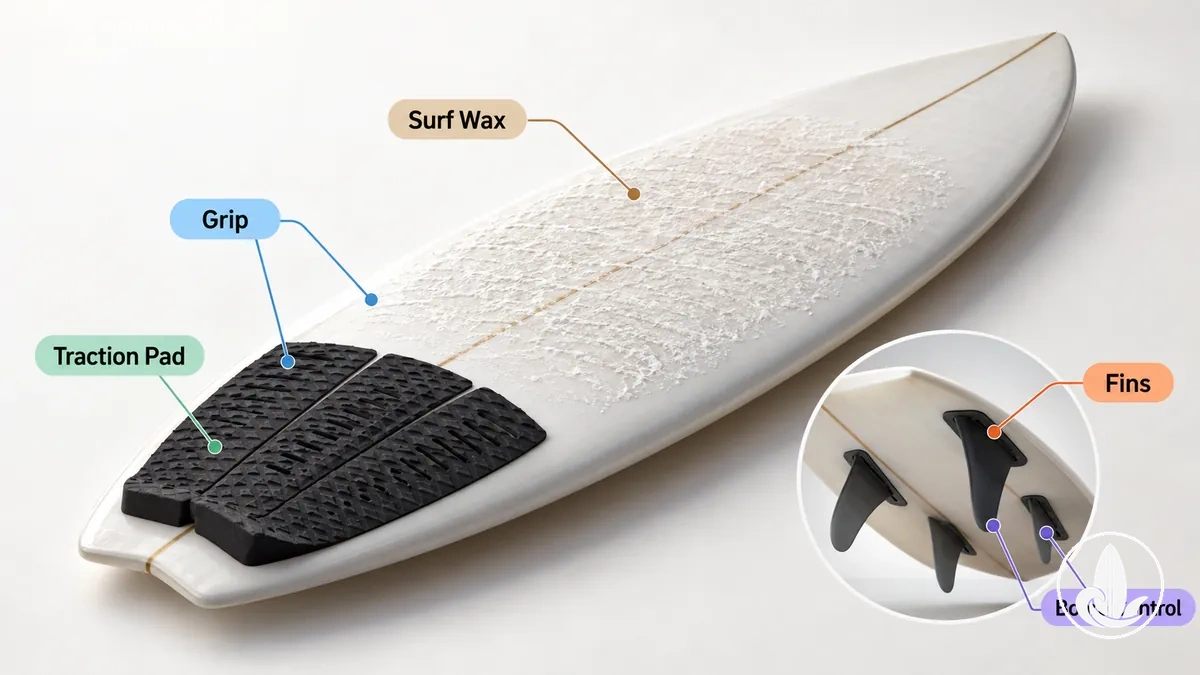
The resulting grip or control feel still depends on board setup, accessory position, conditions and rider preference, so one configuration should not be treated as universally best.
Safety and Board-Connection Accessories
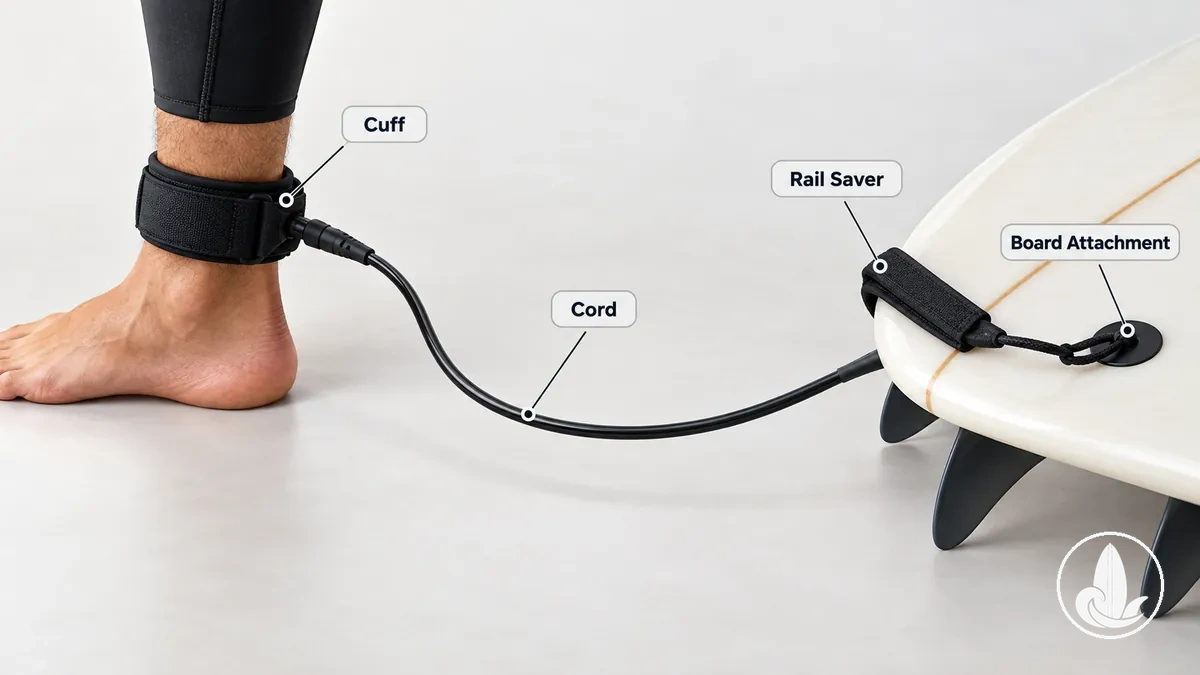
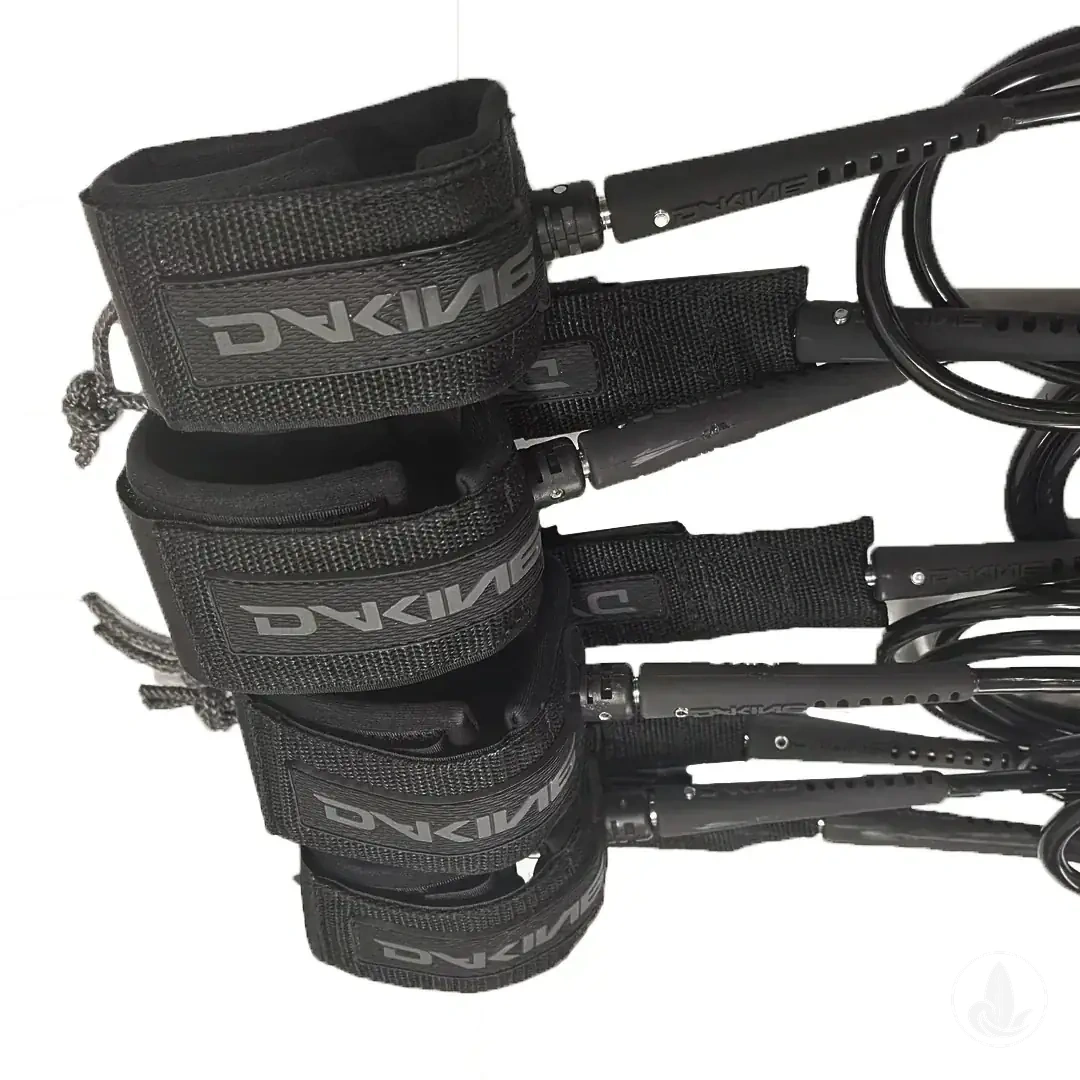
A surfboard leash supports board retention through a connection chain running from the surfer to the board. The useful check is therefore the fit and condition of each link in that chain, not a single isolated specification.
- 1Cuff
Check that it fits its intended attachment area securely and comfortably. - 2Cord
Check for damage, excessive wear or deterioration that could compromise the connection. - 3Rail saver
Check that it is intact and correctly positioned as part of the leash-to-board connection. - 4Board attachment
Check that the leash is securely attached to the board's intended attachment point.
A leash supports retention; it does not guarantee injury prevention or make unsafe surfing conditions safe. Its suitability still depends on the particular board, surfer and intended use.
Protection, Transport and Storage Accessories
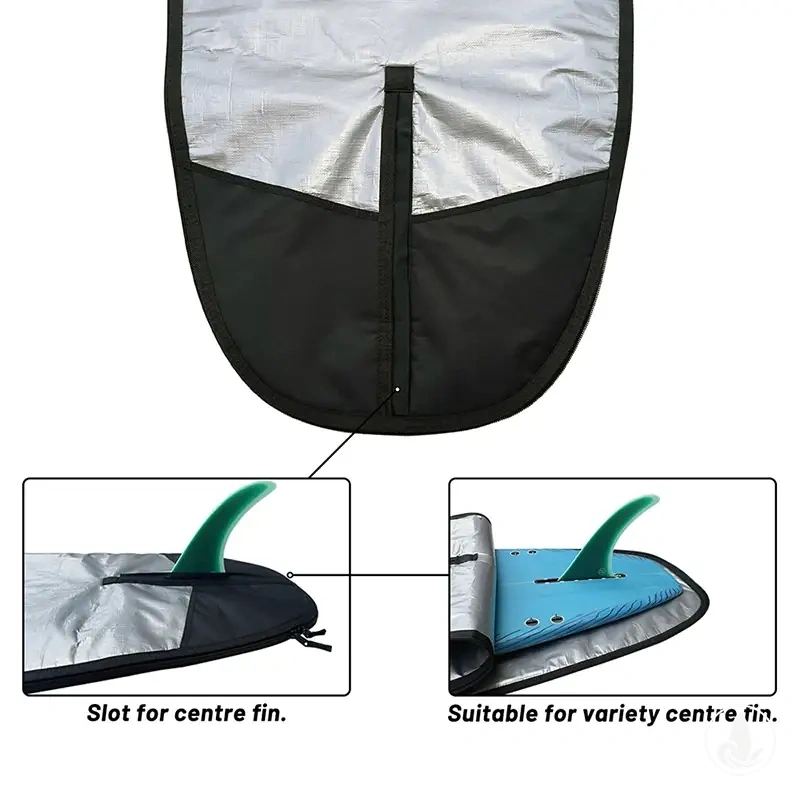
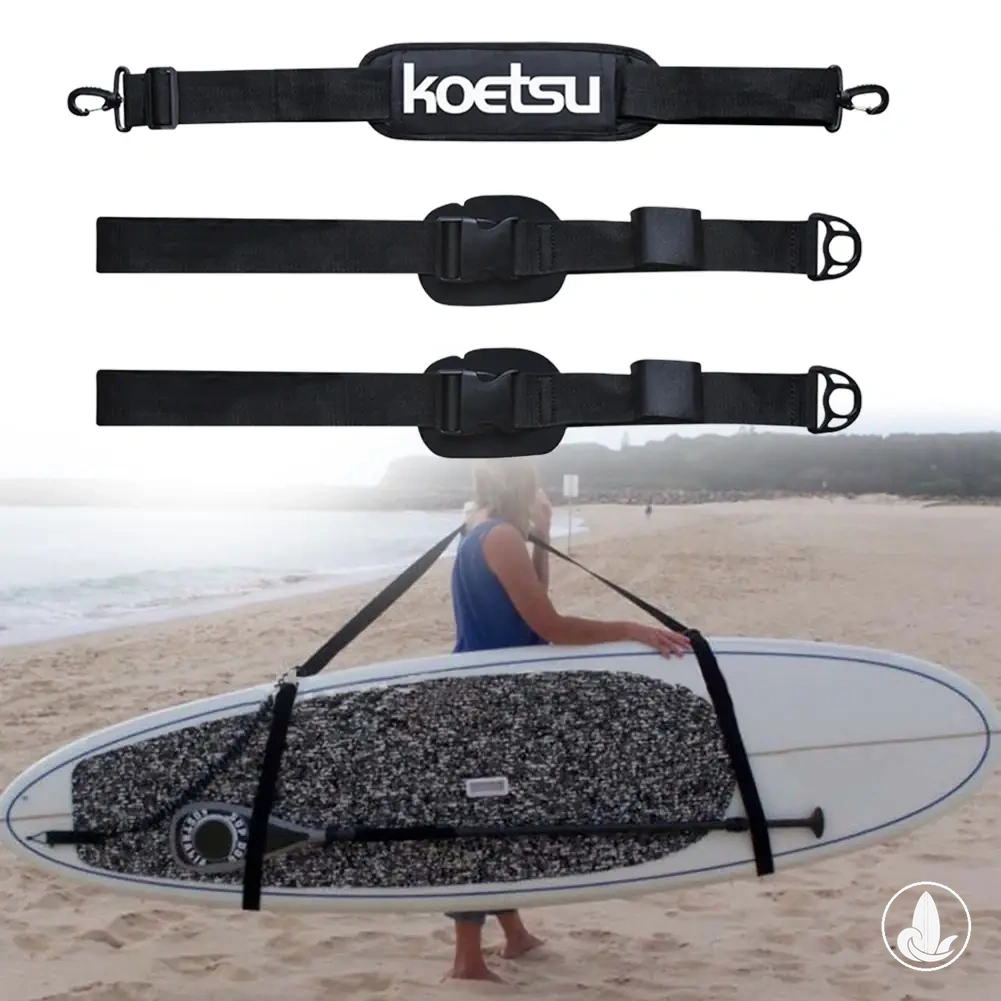
Protection accessories address different damage exposures. Bags and covers provide coverage, rack pads cushion support points, and tie-down straps limit movement when the board is securely restrained during transport.
| Accessory type | Protection attribute | Use condition | Protection role |
|---|---|---|---|
| Board bags | Fit, coverage and padding | Handling or transport | Cushions covered areas against contact, abrasion and some impact exposure |
| Covers | Surface coverage and fit | Handling or storage | Reduces direct surface exposure to abrasion and sun/UV where the board is covered |
| Rack pads | Padded support at contact points | Vehicle transport | Cushions the board where it contacts the rack support |
| Tie-down straps | Secure restraint | Vehicle transport | Limits board movement when the board is securely restrained on the transport support |
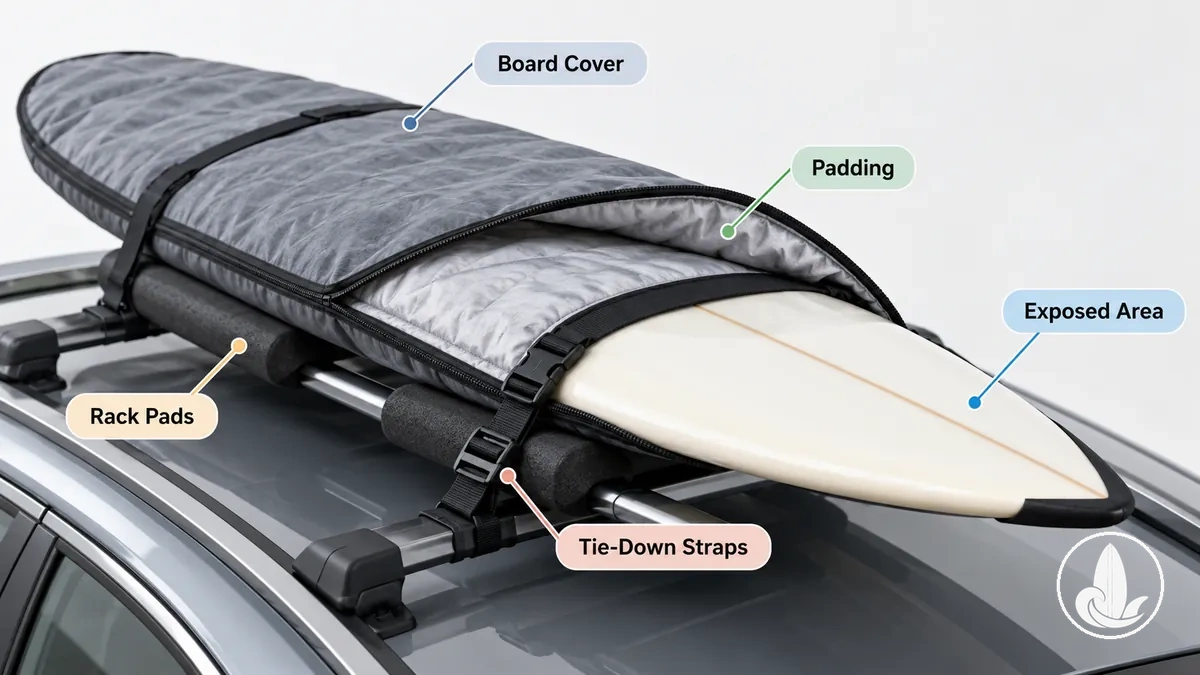
Protection remains exposure-specific: a cover can reduce direct abrasion and sun/UV exposure where it covers the board, but it should not be treated as protection from high ambient heat. During transport, padding reduces contact pressure while restraint addresses movement; neither eliminates all risk of damage.
Setup, Repair and Care Accessories
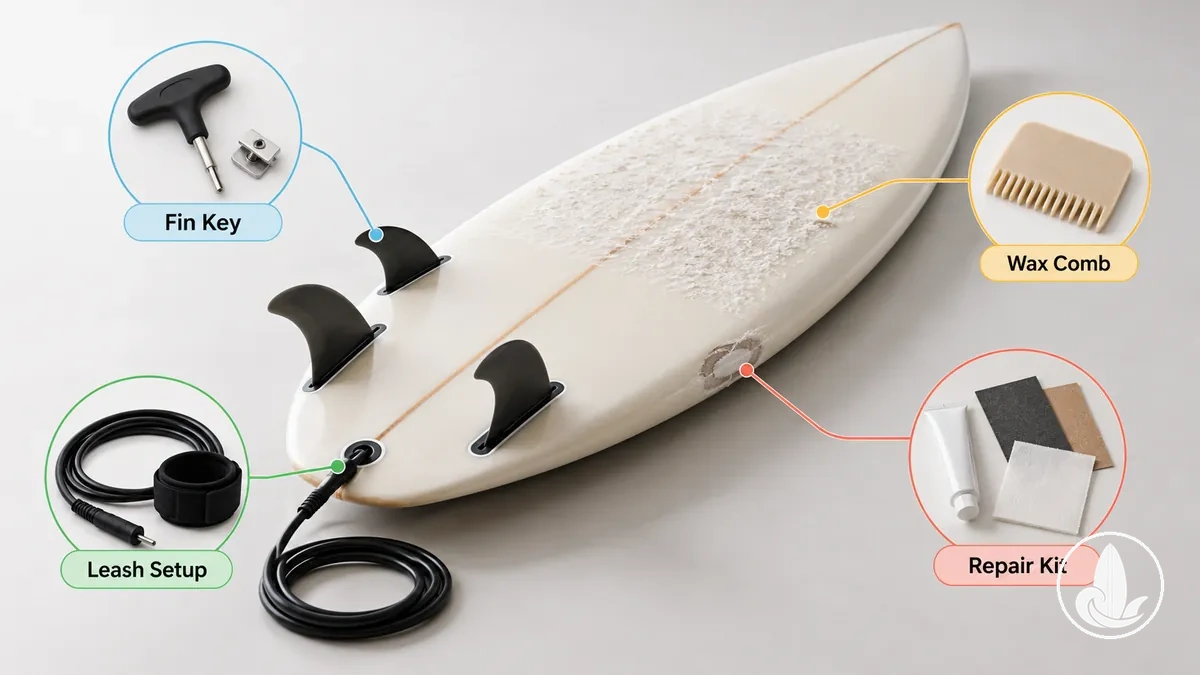
Setup, repair and care accessories support board readiness when the tool or care item is matched to the correct component and task.
- Fin key
- Compatible fin hardware.
- Adjustment or setup only where the board's fin hardware accepts that tool.
- Wax comb
- Waxed deck surface.
- Routine wax care and texture management rather than structural repair.
- Leash setup item
- Tail attachment area.
- Connection setup according to the board and leash design.
- Repair kit
- Localised damage compatible with the kit's material and repair scope.
- Suitable minor repair only; the kit is not a substitute for structural assessment.
If damage appears structural, the board is taking on water, or the repair is outside the kit's intended scope, stop treating it as a minor accessory-level task and have the board assessed or repaired appropriately.
Factors That Determine Accessory Suitability
Accessory suitability is a two-stage decision: first establish whether the option can physically and functionally work with the board, then compare how well it suits the intended use, conditions and handling needs.
Hard constraints — check first
- Board system or interface: a required fin box, attachment point or hardware interface must match.
- Physical fit and dimensions: where coverage, positioning or attachment depends on size, the relevant board dimensions must fit the accessory.
- Intended function: the item must actually support the task it is being chosen to perform.
Trade-offs — compare after fit
- Surfing conditions: use conditions can change which otherwise compatible option is appropriate.
- Experience and setup burden: familiarity can influence which adjustment, control or maintenance demands are manageable.
- Handling, protection and upkeep: transport frequency, storage exposure and maintenance preferences can favour different compatible options.
A compatibility or fit mismatch can make an accessory unsuitable; experience level cannot override that requirement. For beginners, experience is better treated as a preference and manageability factor among already compatible options, not as a separate compatibility standard.
The products below are existing examples from several accessory categories and can be used as comparison starting points after the compatibility checks above.
These are sponsored referral links to third-party listings. Price, availability, shipping and seller terms can change, so verify the current listing as well as the product's dimensions, interface and stated features before buying.
How Surfboard Accessories Work Together as a Complete Setup
Functional completeness means covering the board-related functions that actually apply to the board and use case, not reaching a fixed number of accessories.
Control, retention, protection and transport, and setup and care can complement one another, but the importance of each role changes with board configuration, surfing conditions, transport exposure, experience and maintenance needs.
- Control: cover rider-contact and board-control needs only where those functions are relevant to the board and use case.
- Retention: cover the board-to-surfer connection where a leash is part of the intended setup.
- Protection and transport: cover handling, storage, carrying or transport exposure when those conditions apply.
- Setup and care: cover preparation, routine upkeep and suitable minor repair tasks that are relevant to maintaining board readiness.
A board that is transported frequently may justify more protection and transport equipment, while another setup may place more emphasis on grip, control, retention or routine care. The correct endpoint is therefore appropriate function coverage for the specific board and use context, not a universal essentials checklist.